Fungal infections need new treatments because resistance is narrowing an already limited range of medicines, while toxicity and treatment complexity create additional barriers to care. New antifungal treatments must expand the mechanisms available to clinicians and address the needs of patients with invasive and drug-resistant disease.
Fungal disease is asignificant and growing health problem
Fungal disease includes common skin and mucosal infections as well as serious infections involving the bloodstream, lungs, brain, and other organs. Invasive fungal infections are particularly dangerous for people with weakened immune defenses, including patients receiving chemotherapy, transplant recipients, and people with advanced HIV.
The consequences extend across the healthcare system. In the United States, fungal diseases are associated with approximately 7,300 deaths, 130,000 hospitalizations, and 13 million outpatient visits each year. These estimates cover fungal diseases broadly, not invasive infections alone (CDC: Fungal Disease Burden by the Numbers).
The true fungal disease burden is likely greater because infections are underdiagnosed and underreported. Symptoms can resemble other illnesses, and incomplete surveillance makes it difficult to track every infection or identify changes promptly. Medical advances also contribute to a growing population at risk. Treatments that extend survival after cancer or organ transplantation can leave patients vulnerable to infections during periods of immune suppression. Protecting those patients requires antifungal care that keeps pace with the therapies making their survival possible.
WHO identifies fungal disease as an increasing global public health concern. The WHO fungal priority pathogens list provides a framework for directing research and public health action toward the organisms presenting the greatest needs.
Antifungal resistance is reducing treatment effectiveness
Antifungal resistance occurs when a fungus can survive exposure to a medicine that would normally inhibit or kill it. Some species are naturally resistant to particular drugs; others acquire changes that reduce susceptibility.
These changes can alter a drug’s target or increase the cell’s ability to remove the medicine. A fungus may therefore remain viable even when exposed to a drug that was previously effective.
Drug exposure creates selective pressure: susceptible fungi are suppressed while resistant organisms can persist. Antifungal use in medicine and, for certain fungi, exposure to related agricultural fungicides can contribute to this process. Resistance is therefore not solely a matter of individual prescribing or patient adherence.
The challenge becomes more serious when an organism resists several medicines. The editorial Nature: High time to tackle drug-resistant fungal infections highlights Candida auris as an important example of a pathogen that can resist antifungal treatment.
For clinicians, antifungal drug resistance can turn an already difficult treatment decision into a narrower set of compromises. An alternative medicine may have different toxicity concerns, require intravenous administration, or lack suitable activity at the infection site.
Resistance does not explain every treatment failure. Delayed diagnosis, inadequate drug exposure, and severe immune dysfunction also matter. A new treatment strategy must address these factors alongside the development of medicines with distinct mechanisms of action.


Doctors have few therapeutic options
Treatment of severe fungal infections relies heavily on three major drug classes: azoles, echinocandins, and polyenes. Other agents have important but more specialized roles, and the number of usable treatments varies with the organism and infection site.
Azoles interfere with production of ergosterol, an important fungal membrane component. Polyenes bind ergosterol and disrupt membrane function, while echinocandins inhibit production of a structural carbohydrate in the fungal cell wall.
These medicines remain essential, but each has limitations. Depending on the drug, treatment can involve liver or kidney toxicity, interactions with other medicines, monitoring of drug concentrations, and prolonged administration. The CDC: Clinical Treatment of Fungal Diseases, Antifungals identifies limited options, toxicity, cost, availability, and dosing challenges as barriers to effective antifungal care.
The number of products available does not tell the whole story. Several medicines may share a target or class-related limitation, so switching between them may not provide a genuinely different biological approach.
For drug developers, this creates a clear requirement: expand the range of usable options rather than simply increase the product count. A valuable candidate must fit a clinical need that existing medicines do not adequately meet.
The field needs genuinely new antifungal mechanisms
Improved formulations and longer-lasting drugs can make care more practical. Better delivery may reduce administration burdens or help achieve useful drug concentrations, and these advances deserve attention.
However, improvements within an existing class cannot replace the search for new targets. When treatments depend on a small set of biological pathways, resistance affecting those pathways can compromise multiple options.
Novel antifungal mechanisms offer a way to broaden that foundation. Researchers are investigating fungal stress responses, signaling pathways, and other functions beyond the targets used by established classes. NIH: Recent innovations and challenges in the treatment of fungal infections reviews emerging targets and approaches that combine complementary mechanisms.
The aim is not novelty for its own sake. A new target should be important to the fungus and offer a credible route to selective activity. Researchers must then establish that inhibiting it produces a useful effect at concentrations a patient could safely receive.
The fungal cell wall provides a clear starting point because human cells do not have an equivalent structure. Existing medicines already exploit part of this biology, but additional enzymes involved in building and maintaining the wall offer distinct research opportunities.
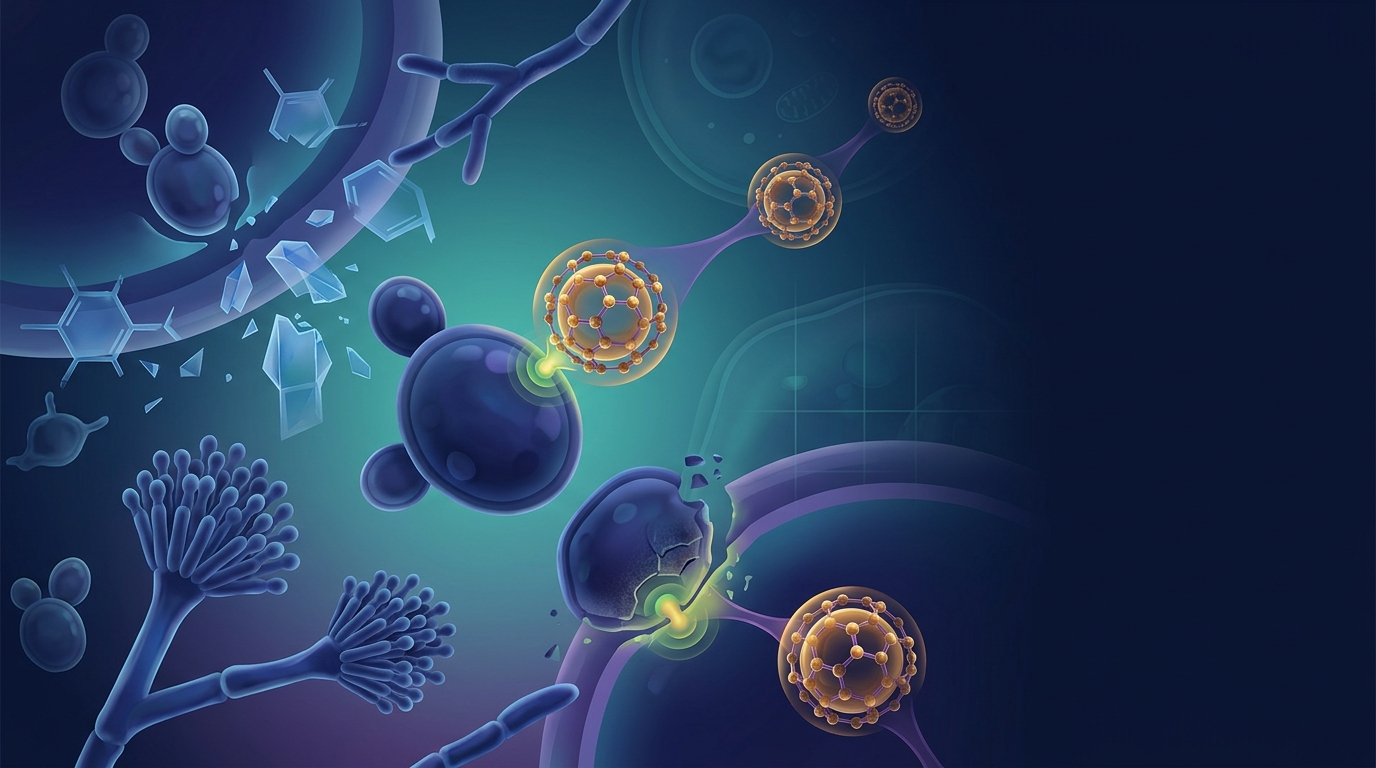
MRX-001, MycoRx’s lead drug candidate, is designed to target Dfg5 and Dcw1, enzymes involved in fungal cell-wall construction. This preclinical program focuses on a different intervention point from the glucan-synthesis target used by echinocandins.
Target selection is the beginning of development, not proof of clinical benefit. Safety, effective dosing, activity against resistant organisms, and resistance development must be evaluated for the candidate itself.
A small pipeline requires sustained investment
The need for new medicines is greater than the number of candidates likely to reach patients. In its April 2025 assessment, WHO reported nine antifungal medicines in clinical development against the most threatening fungi, with only three in Phase 3.
Those figures describe the pipeline at that time, not a current live inventory. WHO also identified too few preclinical candidates to sustain development given the risks and attrition involved (WHO: WHO issues its first-ever reports on tests and treatments for fungal infections).
For investors and research partners, the implication is a need for sustained support across discovery, preclinical testing, and clinical development. Progress depends on generating evidence at each stage, not assuming that a promising target will automatically become a successful medicine.
Frequently asked questions
Why are fungal infections becoming harder to treat?
Fungal infections are becoming harder to treat because resistance is reducing the usefulness of some medicines while more patients live with conditions that weaken immune defenses. Delayed diagnosis, treatment toxicity, and a limited range of drug classes further complicate care.
What causes antifungal resistance?
Antifungal resistance can be intrinsic to a species or acquired through changes that reduce a drug’s activity. Exposure to antifungal medicines or related fungicides can select resistant organisms, while changes to drug targets or drug-removal systems help those organisms survive.
Are fungal infections a growing public health problem?
Yes. WHO describes fungal disease as an increasing public health concern, particularly for severely ill and immunocompromised patients. Gaps in diagnosis, surveillance, and access to treatment make the burden harder to measure and address.
What new antifungal drugs are currently in development?
MRX-001 is a preclinical antifungal drug candidate being developed by MycoRx to target the fungal cell-wall enzymes Dfg5 and Dcw1. The broader antifungal pipeline includes both new mechanisms and improvements to existing approaches, but candidates differ in development stage and intended use. A candidate under development should not be treated as an approved or clinically established therapy.
Can a new mechanism prevent antifungal resistance?
A distinct mechanism may offer activity where resistance has compromised another target, but it does not make a drug resistance-proof. Researchers must test whether resistance emerges, how it develops, and whether it affects other treatments. Appropriate use and surveillance remain important even when new drugs become available.
What a new approach could mean for patients and the field
For patients, the goal is a more dependable range of treatment options when serious fungal infections occur. For clinicians, it is greater flexibility to select a medicine suited to the pathogen, infection site, and patient’s needs.
Biotechnology’s response to fungal disease has also attracted industry attention, including BioBuzz: This New Jersey Biotech is Tackling the Rise of Concerning Fungal Infections. Turning that attention into useful therapies requires rigorous development and collaboration.
MRX-001 connects MycoRx’s program to this need for new antifungal mechanisms. If it succeeds in clinical trials, it could expand treatment options through a distinct approach to fungal cell-wall biology.
Learn more about MycoRx, MRX-001, and the company’s approach to targeting Dfg5 and Dcw1.